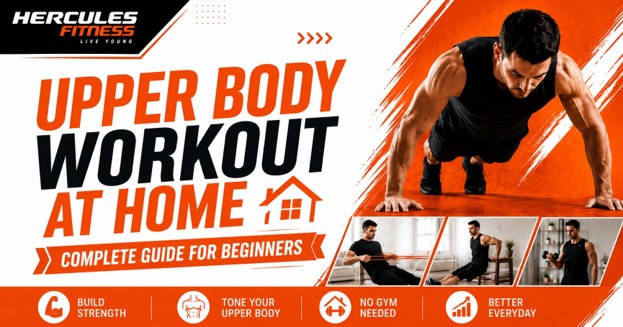
Building a body doesn’t require an expensive gym membership or advanced equipment. With the right upper body workout at home, consistency and proper technique, you can improve your strength, posture and overall fitness from the comfort of your home.
At Hercules Fitness, we believe fitness should be accessible to everyone. Whether you’re starting your fitness journey or getting back into a routine, this beginner-friendly guide will help you build your chest, shoulders, arms and back using simple yet effective exercises.
Why Train Your Upper Body?
An effective upper body workout at home offers health benefits beyond muscle growth.
Benefits of Upper Body Training
- Builds chest, shoulders, arms and back
- Improves posture and body alignment
- Increases strength for everyday activities
- Enhances athletic performance
- Boosts metabolism by building lean muscle
- Improves balance and coordination
- Reduces the risk of injuries through balanced muscle development
Upper body training also makes everyday tasks like lifting, carrying and pushing much easier.
Best Upper Body Workout at Home for Beginners
3 rounds of the following exercises
Repetitions: 10–15 reps each
Rest: 30–60 seconds between exercises
1. Push-Ups
Targets: Chest, shoulders, triceps and core
Push-ups are one of the best bodyweight exercises for building upper body strength. If standard push-ups are challenging, begin with knee push-ups or incline push-ups using a bench or table.
Benefits:
- Strengthens chest muscles
- Improves arm strength
- Builds core stability
2. Chair Dips
Targets: Triceps and shoulders
Use a chair and lower your body slowly before pushing back up. Maintain proper posture throughout the movement to protect your shoulders.
Benefits:
- Strengthens triceps
- Improves shoulder stability
- Enhances pushing strength
3. Pike Push-Ups
Targets: Shoulders and upper chest
Pike push-ups are excellent for developing shoulder strength and preparing for more advanced exercises.
Benefits:
- Builds stronger shoulders
- Improves upper chest development
- Increases shoulder mobility
4. Resistance Band Rows (or Backpack Rows)
Targets: Upper back and biceps
Don’t have resistance bands? Fill a backpack with books. Perform bent-over rows to effectively train your back muscles.
Benefits:
- Improves posture
- Strengthens upper back
- Builds biceps
5. Plank Shoulder Taps
Targets: Core, shoulders and chest stability
Keep your hips steady while alternating shoulder taps. This exercise develops balance, coordination and upper body control.
Benefits:
- Strengthens the core
- Improves shoulder stability
- Enhances body control
Tips for Better Results
To get the most from your upper body workout at home, follow these tips:
- Warm up for a few minutes before exercising.
- Focus on form instead of speed.
- Increase repetitions gradually as you get stronger.
- Stay hydrated throughout your workout.
- Eat a protein-rich diet to support muscle recovery.
- Allow one day of rest between upper body sessions.
Common Mistakes to Avoid
Avoid these mistakes for better performance and injury prevention:
- Skipping your warm-up
- Using incorrect exercise form
- Training every day without recovery
- Holding your breath during exercises
- Ignoring nutrition and hydration
Final Thoughts
Starting an upper body workout at home is one of the simplest and most effective ways to build strength, improve posture and boost your overall fitness. You don’t need gym equipment—consistency, dedication and the right workout plan are what matter.
At Hercules Fitness, we’re committed to helping beginners achieve their fitness goals with workout routines and expert guidance. Begin with these exercises and stay consistent. You’ll notice improvements in your strength, endurance and confidence within a week.
Your fitness journey begins at home, one workout at a time.
Frequently Asked Questions
1. Can I build muscle with an upper body workout at home?
Yes. You can build muscle at home by performing bodyweight exercises like push-ups, chair dips and resistance band workouts consistently. As your strength improves, gradually increase the intensity or resistance.
2. How many times a week should beginners do an upper body workout?
Beginners should perform an upper body workout at home 2–4 times per week, allowing at least one day of rest between sessions for proper muscle recovery.
3. Do I need gym equipment for an upper body workout at home?
No. Most beginner workouts can be done using your body weight. Resistance bands, dumbbells or a sturdy chair can add variety and increase workout intensity.
4. What are the best upper body exercises for beginners?
Some of the best beginner exercises include push-ups, knee push-ups, chair dips, pike push-ups, resistance band rows, plank shoulder taps and dumbbell shoulder presses.
5. How long should an upper body workout last?
A beginner-friendly upper body workout typically lasts 20–40 minutes, including a warm-up, workout and cool-down.
6. Is it okay to do upper body workouts every day?
No. Your muscles need time to recover and grow. Training the same muscle groups every day can increase the risk of fatigue and injury. Aim for 48 hours of recovery before working the same muscles again.
7. Can I lose belly fat by doing upper body workouts?
Upper body workouts help burn calories and build muscle, but they cannot reduce fat from one specific area. Combining strength training with cardio and a balanced diet is the most effective way to reduce overall body fat.
8. What is the biggest mistake beginners make during home workouts?
One of the most common mistakes is focusing on speed instead of proper form. Poor technique can reduce results and increase the risk of injury. Always prioritize controlled movements and correct posture.
9. Can I get stronger using only bodyweight exercises?
Yes. Bodyweight exercises can significantly improve upper body strength, especially for beginners. As you progress, you can increase repetitions, try more challenging variations or add resistance bands and weights.
10. What should I eat after an upper body workout at home?
After your workout, eat a meal rich in protein and complex carbohydrates within 1–2 hours. Foods like eggs, chicken, fish, Greek yogurt, tofu, rice, oats and fruits help support muscle recovery and replenish energy.